

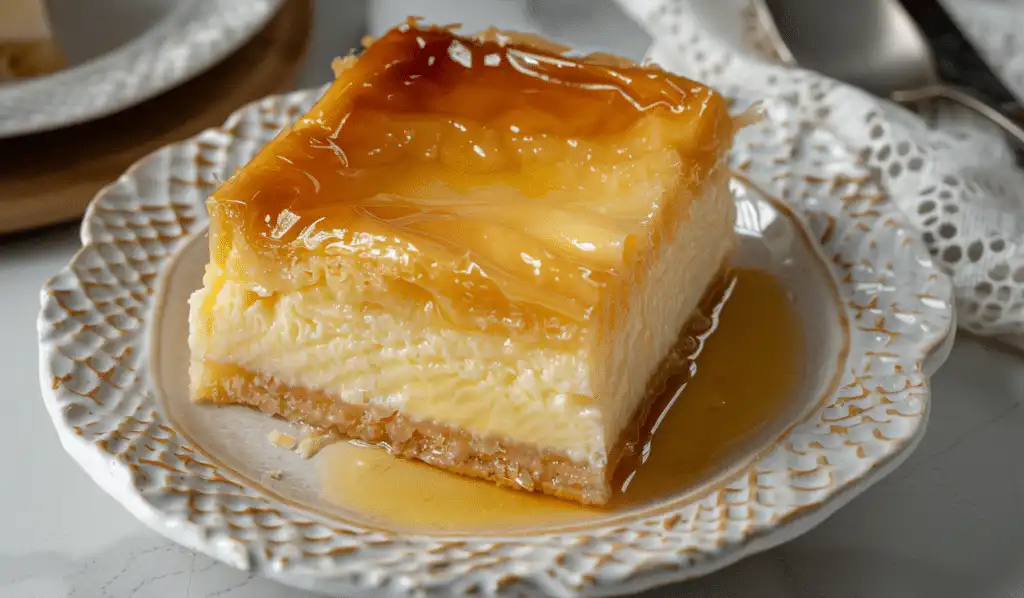
Galaktoboureko has a special place in my heart—and my kitchen. It’s the first Greek dessert I truly fell in love with. My mom got the recipe from a coworker, and from then on, it became a regular in our home. Creamy semolina custard, layers of crisp phyllo, and a sweet lemony syrup… what’s not to love?
At TastyJoyful, I share recipes that feel joyful and doable, no matter your skill level. Inspired by family traditions, travel, and chefs like Molly Yeh, every dish here—including this galaktoboureko—is meant to bring comfort and flavor to your table.
Table of Contents
Understanding Galaktoboureko and Its Cultural Charm
What Is Galaktoboureko Made Of
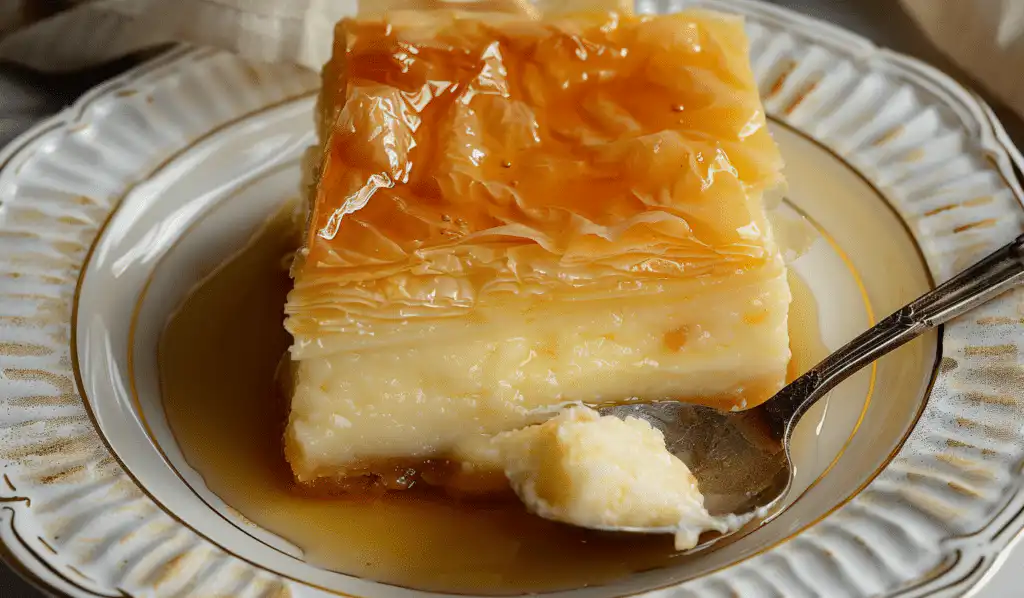
Galaktoboureko is a classic Greek dessert made with three main components that come together richly and unforgettably. At the heart of this treat is a smooth semolina custard, which is gently folded with eggs and thickened to a creamy consistency. This custard is then layered between sheets of buttery phyllo dough and baked until golden and crisp.
After baking, the entire dish is soaked in a warm sugar syrup. The syrup seeps into the flaky layers, giving galaktoboureko its signature sticky-sweet finish. Each bite offers a delightful contrast of creamy and crispy textures, bursting with vibrant citrus flavor.
To break it down even further, here are the essential ingredients:
| Ingredient | Function in the Recipe |
|---|---|
| Semolina flour | Thickens the custard and adds texture |
| Whole milk | Provides richness and body |
| Cornstarch | Enhances the thickness of the filling |
| Eggs | Binds and enriches the custard |
| Sugar | Sweetens both the filling and syrup |
| Phyllo dough | Creates light, crispy layers |
| Butter | Adds richness and crisps the phyllo sheets |
| Water with sugar syrup | Gives galaktoboureko its glossy sweet finish |
This dessert is a favorite across Greek households and bakeries, often enjoyed during festive occasions, holidays, and Sunday meals with family.
Exploring the Origins of This Iconic Greek Dessert
This creamy custard pastry has deep roots in Greek culinary tradition. The name comes from Greek words: “gala,” meaning milk, and “boureko,” meaning something encased or filled. Together, they describe a dessert built around a milk-based filling tucked inside layers of phyllo pastry.
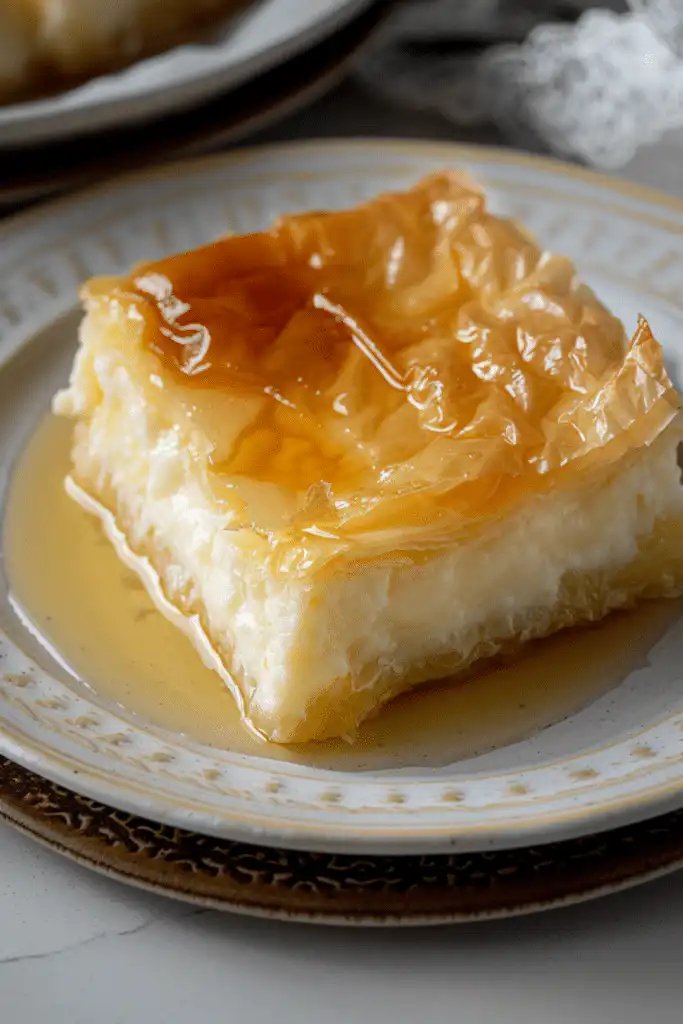
Considered a staple in many Greek homes, this treat goes beyond being just another sweet. It carries memories of holidays, Sunday lunches, and big family tables filled with food and laughter. Unlike other famous pastries like baklava, which uses nuts as its main ingredient, this dessert features a smooth custard center that soaks up syrup while keeping its crisp texture.
Typically served at room temperature, it’s a common sight during Easter, Christmas, and special family gatherings. That said, it’s also made for no reason at all—to enjoy something comforting and homemade.
If you’re new to Greek sweets, this is a fantastic place to start. It offers a beautiful balance of flavor, tradition, and texture, all wrapped into one unforgettable dessert.
Ingredients and Variations of Galaktoboureko
Traditional Ingredients for Authentic Galaktoboureko
Crafting an authentic galaktoboureko requires carefully selected ingredients. This dessert might seem fancy, but the ingredient list is simple and accessible. It begins with a creamy custard base from semolina flour, whole milk, and eggs. This combination gives the filling its unique body and flavor.
White sugar is used in both the custard and the syrup. Cornstarch helps thicken the mixture even further, while vanilla extract adds a hint of aroma. The pastry is built with thin phyllo dough sheets, lightly brushed with melted butter. These sheets bake up light and crisp, offering the perfect contrast to the decadent filling.
Here is a breakdown of what you will need:
| Ingredient | Quantity | Purpose |
|---|---|---|
| White sugar | 2 ½ cups | Used in both custard and syrup |
| Semolina flour | 1 cup | Creates the base of the custard |
| Cornstarch | 3 ½ tablespoons | Adds extra thickness |
| Whole milk | 6 cups | Provides creaminess and body |
| Large eggs | 6 | Binds and enriches the filling |
| Vanilla extract | 1 teaspoon | Enhances flavor |
| Butter, melted | ¾ cup | Helps crisp the phyllo layers |
| Phyllo dough | 12 sheets | Forms the flaky crust |
| Water | 1 cup | Combines with sugar to make syrup |
The process involves slowly heating the milk, gradually stirring in the semolina mixture, folding in whipped eggs and sugar, and layering the creamy filling between sheets of phyllo in a buttered pan. Once baked, a warm sugar syrup is poured on top, allowing the pastry to absorb the sweetness without turning soggy.
Popular Regional Twists and Modern Variations
While the traditional recipe remains popular, several variations have emerged, depending on region and personal taste. Some versions include citrus zest in the custard to brighten the flavor. Others may use cinnamon in the syrup or add a hint of orange blossom water for a fragrant finish.
In Northern Greece, you might find galaktoboureko with slightly thicker phyllo layers and less syrup, creating a crunchier texture. Some cooks cut the dessert into diamond shapes before baking, while others leave it in square portions.
There are also modern takes on the recipe. For example, a few pastry chefs use flavored milk or add a splash of liqueur to the custard. You might even see individual roll-shaped portions instead of a large pan, perfect for serving at parties or plated dinners.
No matter the variation, the essence of the dessert remains the same. It is rich, sweet, and utterly satisfying with every bite.
How to Make Galaktoboureko from Scratch
Step-by-Step Preparation of Semolina Custard
Making galaktoboureko at home is a big project. Still, it is surprisingly manageable when broken down into simple steps. The heart of the dessert lies in its creamy semolina custard. This filling is soft, rich, and perfectly sweet.
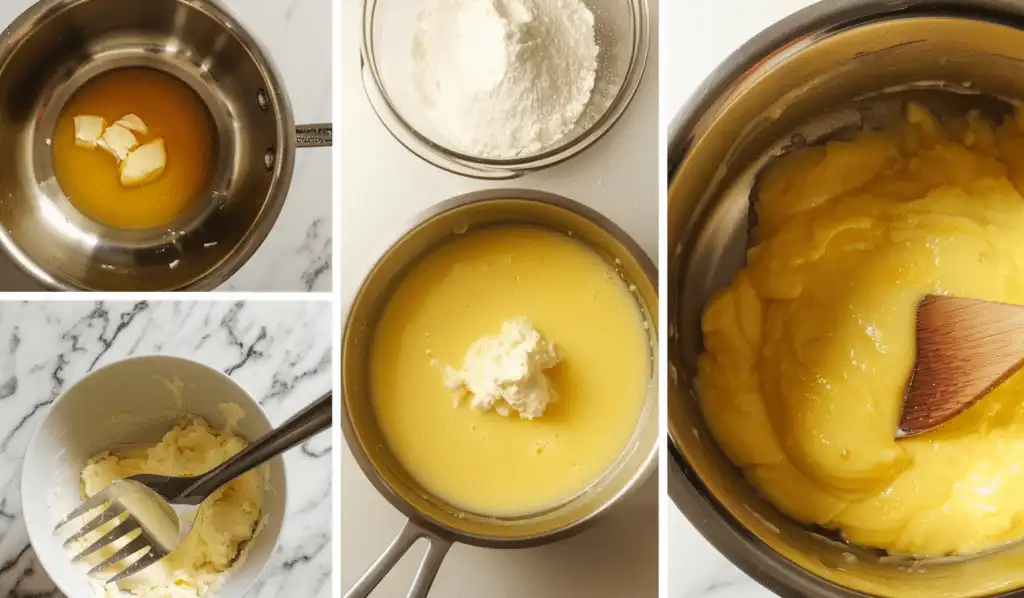
Start by whisking together one cup of sugar, semolina flour, cornstarch, and a pinch of salt. It is essential to combine these dry ingredients well to avoid any clumps later on. In a separate saucepan, bring the milk to a gentle boil over medium heat. Slowly pour the dry mixture into the hot milk, stirring with a wooden spoon.
Keep stirring until the mixture thickens and reaches a full boil. Once it does, please remove it from the heat and set it aside. In another bowl, beat the eggs and the remaining half cup of sugar with an electric mixer until the mixture becomes thick and pale. This should take about ten minutes on high speed.
After the eggs are thoroughly whipped, gently fold them into the hot custard with a splash of vanilla extract. Partially cover the custard and allow it to cool slightly before layering it into the phyllo crust.
How to Handle Phyllo Dough for a Flaky and Golden Crust
To get the signature crispy texture of galaktoboureko, handling phyllo dough properly is essential. This thin, delicate pastry forms both the base and the top crust of the dessert. When done right, it creates the perfect contrast to the creamy semolina filling.
Phyllo can dry out fast, so always keep the unused sheets covered with a slightly damp towel while you work. This keeps them flexible and prevents cracking. Ensure your melted butter is ready in advance, since each layer needs a generous brush to bake up golden and crisp.
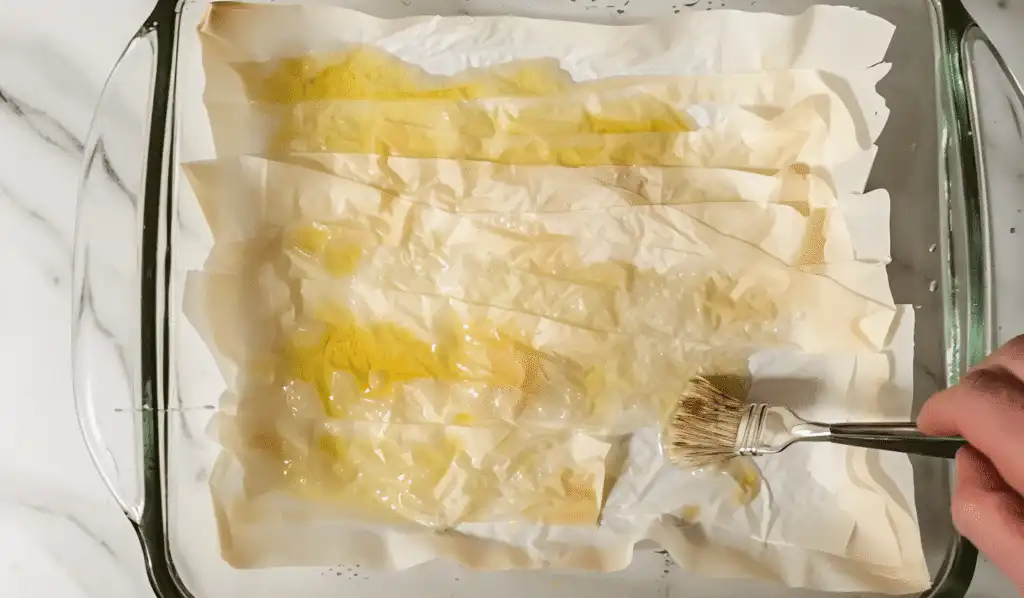
Begin by brushing the bottom and sides of a 9×13-inch pan with butter. Place a single phyllo sheet and brush it generously with butter.. Repeat the process with about six or seven sheets. Allow the edges to drape slightly over the pan — this helps hold the custard filling in place.
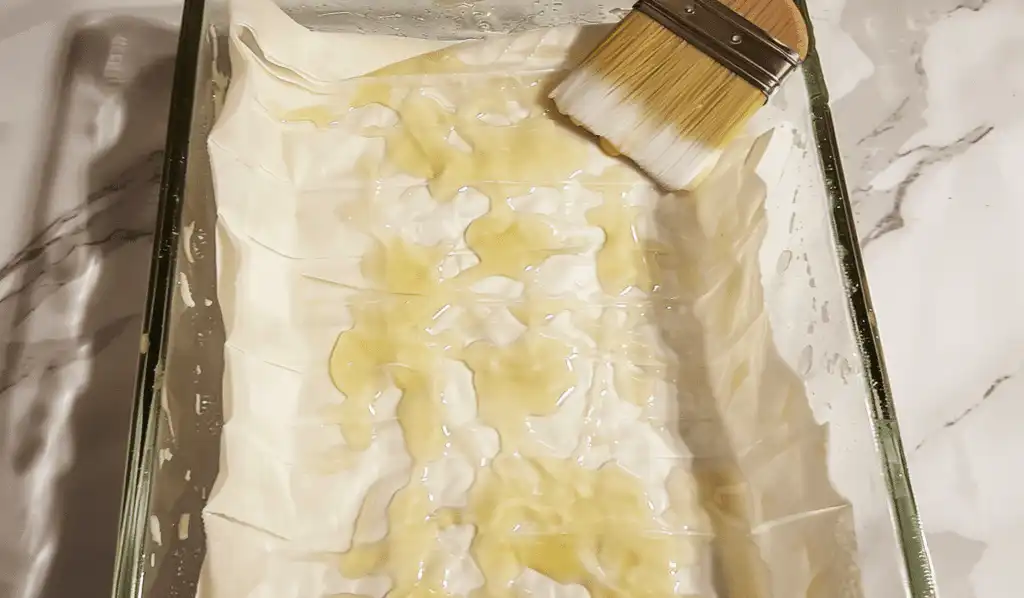
After preparing the base, pour the custard for your galaktoboureko and spread it evenly. Continue layering the remaining phyllo sheets on top, brushing each one carefully. Fold in the sides to seal the custard.
Bake your dish in a preheated oven at 350 degrees Fahrenheit for 40 to 45 minutes. The top should be a rich golden brown, and the custard inside should be set but still soft. Keep an eye on the oven toward the end of the baking time to avoid overbrowning.
While your galaktoboureko is baking, prepare the syrup. Combine sugar and water in a saucepan, then bring it to a gentle boil. Stir until the sugar dissolves fully, creating a clear, light syrup.
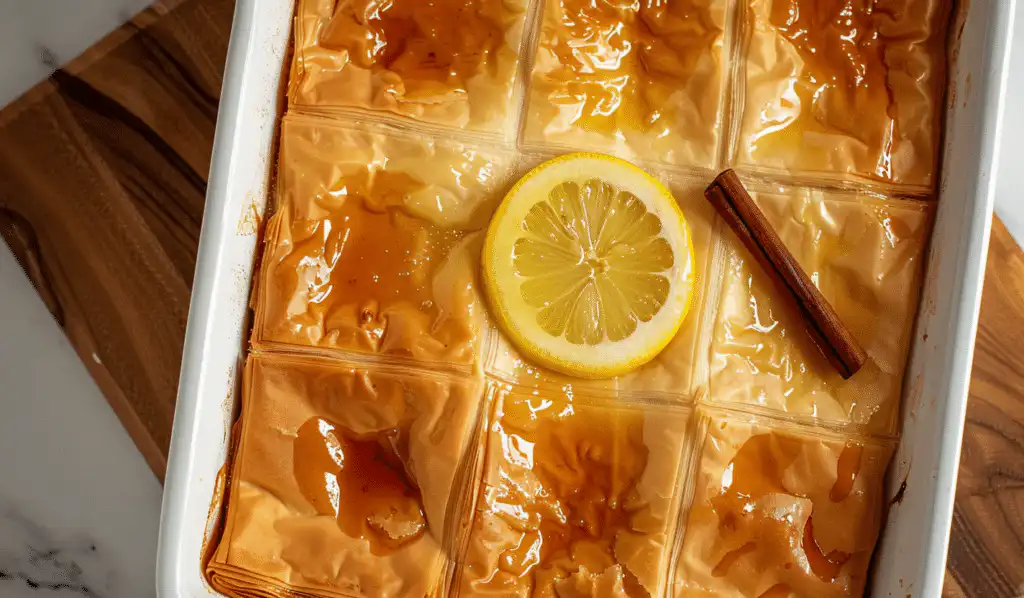
Once the dessert is baked, gently drizzle hot syrup over the top. Pay special attention to the edges, where the crust soaks up the syrup most. Let the entire tray cool before cutting it into pieces. Allowing it to rest ensures the layers appropriately set, making slicing effortless.
Making galaktoboureko at home becomes much simpler once you know how to handle phyllo dough correctly. With practice, you’ll create perfect layers every time.
Baking and Syrup Techniques for Perfect Results
Baking Tips for a Crisp and Golden Finish
To achieve a perfect galaktoboureko, baking time and technique are just as important as assembling the layers. Once your dessert is fully layered and brushed with butter, place it on the middle rack of a preheated oven at 350 degrees Fahrenheit. Positioning the tray on the middle rack promotes even baking from top and bottom.
Baking usually takes 40 to 45 minutes. Look for a golden, flaky top and a custard that feels set but slightly jiggly in the center. If the top begins to brown too quickly, you can loosely place a piece of parchment paper on top during baking to avoid burning.
Avoid opening the oven door frequently. Sudden temperature changes may cause the delicate custard to collapse or the pastry to bake unevenly. Use the oven light and glass door to check progress without disturbing the heat.
Once the galaktoboureko is out of the oven, it is essential to move quickly to the syrup stage while the crust is still hot.
How to Make and Apply the Syrup Correctly
The syrup imparts galaktoboureko with its distinctive, glossy finish. When done right, it balances the crisp texture of the phyllo with a moist, flavorful sweetness.
To make the syrup, combine one cup of sugar with one cup of water in a saucepan. Set it over medium heat and stir gently until the sugar fully dissolves. Allow the mixture to boil for about five minutes until it slightly thickens. You can also add a strip of lemon peel or a drop of vanilla extract for extra fragrance.
The syrup should be hot when poured, but the galaktoboureko must be fresh from the oven. This temperature contrast is key. Pour the syrup slowly and evenly over the entire surface. Focus more on the edges where the pastry can absorb more liquid, and do not rush the process. Giving the syrup time to soak ensures that the dessert holds its structure while becoming perfectly moist.
After pouring, allow the galaktoboureko to cool at room temperature. This resting period helps the syrup distribute evenly through the layers. Once cooled, the crust remains crisp while the inside stays soft and luscious.
These baking and syrup techniques elevate your dessert from good to exceptional. Paying close attention to timing and temperature makes all the difference in the final result.
How to Serve and Store Galaktoboureko
Should Galaktoboureko Be Served Hot or Cold
There is a personal preference when serving galaktoboureko. Still, traditionally, it is best enjoyed at room temperature. This resting time lets the custard set and the syrup thoroughly soak into the pastry layers. Serving it too hot straight from the oven may cause the custard to fall apart when sliced, and the flavors will not be as pronounced.
Some people prefer it slightly warm, especially on cooler days. If that is your choice, let the dessert cool for at least one hour after baking, then warm individual pieces in the oven for a few minutes before serving. This brings out the comforting aroma of the custard and makes the syrup slightly runnier, creating a rich mouthfeel.
Others enjoy galaktoboureko chilled from the refrigerator. This version is firmer in texture and works well in warmer climates or during the summer months. No matter how you serve it, the flavors and textures remain balanced and satisfying.

When serving, use a sharp knife to cut precise slices. Clean the blade between cuts to maintain tidy edges. For a finishing touch, sprinkle each portion with a pinch of cinnamon or a strip of lemon zest to enhance presentation and aroma.
Best Practices for Storage and Refrigeration
If you have leftovers, proper storage will help maintain the quality of your galaktoboureko for several days. Once the dessert has cooled to room temperature, transfer the pieces to an airtight container. You can keep it in the refrigerator for up to four days without compromising flavor or texture.
To prevent the phyllo from becoming soggy, avoid covering the dessert while it is still warm. Moisture will build up and ruin the crisp crust. Always let it cool completely before sealing it.
When ready to enjoy again, reheat individual portions in the oven at 300 degrees Fahrenheit for about ten minutes. This refreshes the crust without drying out the filling. Microwaving is not recommended since it tends to make the pastry chewy instead of crisp.
If serving cold, remove it from the fridge and let it sit for ten minutes before eating. This helps the flavors bloom naturally.
Reheating and Enjoying Leftovers
How to Reheat Galaktoboureko in the Oven Without Ruining It
Reheating galaktoboureko helps you enjoy that same fresh-out-of-the-oven texture without drying the custard or softening the phyllo too much. The oven is the best method to bring it back to life.
Start by preheating your oven to 300 degrees Fahrenheit. Place a few slices of galaktoboureko on a baking sheet lined with parchment paper. Cover the top lightly with foil to protect the phyllo from over-browning while allowing the heat to warm the custard evenly. Heat the slices for about ten to twelve minutes until they are warm in the center and the pastry is slightly crisp.
Avoid using the microwave for reheating. While it may seem quicker, it often causes the phyllo to become soggy, and the custard loses its smooth texture. The dessert quality is noticeably better when warmed slowly in the oven.
If you enjoy a chilled contrast, you can serve it at room temperature and skip reheating entirely. The syrup tends to firm up when cold, so resting it for ten minutes before serving helps balance the flavors and textures.
How Long Can You Keep Galaktoboureko in the Fridge
Galaktoboureko stores well for several days if kept properly. After the dessert has thoroughly cooled, transfer it to an airtight container. Store it in the refrigerator where it can stay fresh for up to four days.
To maintain the texture of the phyllo crust, avoid stacking the slices on each other. Store them in a single layer or place parchment paper between layers if necessary. This prevents moisture from accumulating and keeps the top crisp.
Although it is best eaten within a few days, galaktoboureko can be frozen if needed. For freezing, securely wrap each slice in plastic wrap, followed by a layer of foil. Store them in a freezer-safe container. When ready to enjoy, allow the pieces to thaw in the refrigerator overnight and then reheat in the oven as outlined above.
Taking care with storage and reheating ensures every bite of galaktoboureko remains as enjoyable as the day it was made.
Galaktoboureko vs Bougatsa and Other Greek Sweets
What Is the Difference Between Bougatsa and Galaktoboureko
While galaktoboureko and bougatsa may look similar, they are different desserts with unique characteristics and preparation styles.
Galaktoboureko is made with a semolina-based custard baked between layers of buttered phyllo and then soaked in a hot sugar syrup. This syrup is what gives galaktoboureko its signature sweetness and glossy finish. The syrup also helps preserve the dessert and keeps the custard moist.
Bougatsa, on the other hand, can be sweet or savory. The sweet version features a creamier custard that is typically made without semolina. It is usually wrapped in thicker phyllo and baked without syrup. After baking, bougatsa is dusted with powdered sugar and cinnamon rather than soaked in syrup. The result is a lighter, crispier pastry with a mild sweetness.
Another significant difference lies in the texture. Galaktoboureko has a more structured custard that holds its shape when sliced. Bougatsa tends to be softer and more delicate, often eaten warm with a spoon or fork.
Regarding flavor, galaktoboureko is richer and sweeter due to the syrup, while bougatsa offers a more subtle and creamy profile.
Comparing to Other Custard-Based Greek Desserts
Greek cuisine offers a variety of custard-filled pastries, each with its own special twist. Galaktoboureko stands out for its combination of custard, crispy phyllo, and sweet syrup, making it more decadent and indulgent than other options.
Milk pie, also known as “galatopita,” is another custard-based dessert, but it is made without phyllo. Instead, it features a baked semolina custard topped with a thin golden crust. It is often less sweet and more rustic in appearance compared to galaktoboureko.
There is also a dessert called “revani” which includes semolina. Still, it is a syrup-soaked sponge cake rather than a layered pastry. While it shares some ingredients with galaktoboureko, the texture and method of preparation are entirely different.
These variations show how diverse Greek dessert traditions can be. Each recipe offers a different take on combining custard and syrup with either pastry or cake elements.
If you are deciding between galaktoboureko and other sweets, consider the level of sweetness and texture you are looking for. If you love flaky layers and syrupy richness, galaktoboureko is the clear winner.
Is Galaktoboureko Healthy? Nutrition and Dietary Notes
Nutritional Breakdown and Portion Suggestions
Galaktoboureko is rich in flavor and texture, but like many desserts, it is also rich in calories. A typical serving of galaktoboureko contains around 360 to 380 calories, depending on the size of the slice and the amount of syrup used. It also includes about 14 grams of fat, mostly from butter and eggs, and over 50 grams of carbohydrates, mainly from sugar and semolina.
This dessert also offers a small amount of protein, around 7 to 8 grams per serving, thanks to the eggs and milk in the custard. While it is not considered a low-calorie option, it can still be enjoyed in moderation as part of a balanced lifestyle.
Suppose you are serving galaktoboureko at a gathering or holiday event. In that case, you can cut smaller pieces to help manage portion sizes. A smaller slice still delivers the complete flavor experience while reducing overall sugar and calorie intake.
For those who are tracking their nutrition closely, consider using lighter ingredients. Low-fat milk can be substituted for whole milk, and butter can be reduced slightly without compromising too much on texture. However, the phyllo and syrup are essential parts of the dessert’s identity, so it is best not to omit them entirely.
Are Greek Desserts Healthy Compared to Western Sweets
Greek desserts like galaktoboureko differ from many Western-style sweets in both preparation and ingredients. They typically incorporate wholesome ingredients such as semolina, olive oil, honey, nuts, and citrus. Even though galaktoboureko contains sugar syrup and butter, it avoids heavy creams, artificial flavorings, or frostings in many commercial desserts.
The syrup in galaktoboureko is made from water and sugar, sometimes with added lemon peel or a touch of vanilla. It is boiled until slightly thickened, but does not include corn syrup or preservatives. This makes it a cleaner choice compared to processed cakes and pastries.
Many Greek sweets, including this one, focus on balance. They combine richness with fresh notes like lemon and cinnamon, offering a more natural approach to indulgence. While still sweet and calorie-dense, they are often served in small portions and meant to be savored rather than eaten in large amounts.
Suppose you want a treat that feels homemade and satisfying without unnecessary additives. In that case, galaktoboureko fits beautifully into that category.
Conclusion: Why Galaktoboureko Deserves a Spot on Your Dessert Table
Galaktoboureko is more than a dessert. It celebrates Greek tradition, family gatherings, and the comforting warmth of homemade baking. From its flaky phyllo layers to its silky semolina custard and aromatic syrup, every bite tells a story of heritage and love.
Whether new to Mediterranean sweets or grew up with them, galaktoboureko offers a perfect blend of texture, flavor, and simplicity. It can be served warm or cold, made ahead for events, or baked just because your kitchen needs a little joy.
So the next time you plan a sweet treat, reach for this timeless Greek custard pie. You won’t just be making dessert. You’ll be making memories.
Frequently Asked Questions About Galaktoboureko
What is galaktoboureko made of ?
Galaktoboureko is made from a custard filling that includes semolina flour, whole milk, eggs, sugar, and vanilla. The filling is layered between sheets of phyllo dough that are brushed with melted butter. Once baked, the dessert is topped with a warm sugar syrup that soaks into the crust, giving it a sweet and glossy finish.
How do you pronounce galaktoboureko in Greek ?
In Greek, galaktoboureko is pronounced gah-lahk-toh-BOO-reh-koh. The emphasis is placed on the “BOO” syllable. It combines the word “gala” which means milk, with “boureko” which refers to something wrapped or filled.
What is the meaning of galaktoboureko ?
The name galaktoboureko translates roughly to “milk-filled pastry.” It perfectly describes the dessert, which features a creamy milk-based custard wrapped in crisp phyllo layers. This name reflects its roots in Greek baking, where descriptive names are often used for traditional dishes.
Is galaktoboureko hot or cold ?
Galaktoboureko is traditionally served at room temperature. However, some people enjoy it slightly warm while others prefer it chilled. Each option offers a different experience. Warm servings bring out the aroma and softness, while cold servings provide a firmer texture and more pronounced syrup flavor.
